

Everything You Need To Know About Permanent Lip Liner
Permanent lip liner is a cosmetic tattoo procedure that adds pigment along the natural lip border for a more defined look. It can improve uneven lip outlines, add subtle color, and create a polished look without applying traditional lip liner every day. Jaudon Sunde, C.P.C.T., L.M.T., P.L., provides permanent cosmetic services, including permanent blended lip liner and permanent full lip color. Her work focuses on enhancing natural features through personalized cosmetic pigmentation. For more information, contact us or request an appointment online. We are conveniently located at 18820 E. Bagley Rd.#1 Middleburg Heights, OH 44130.
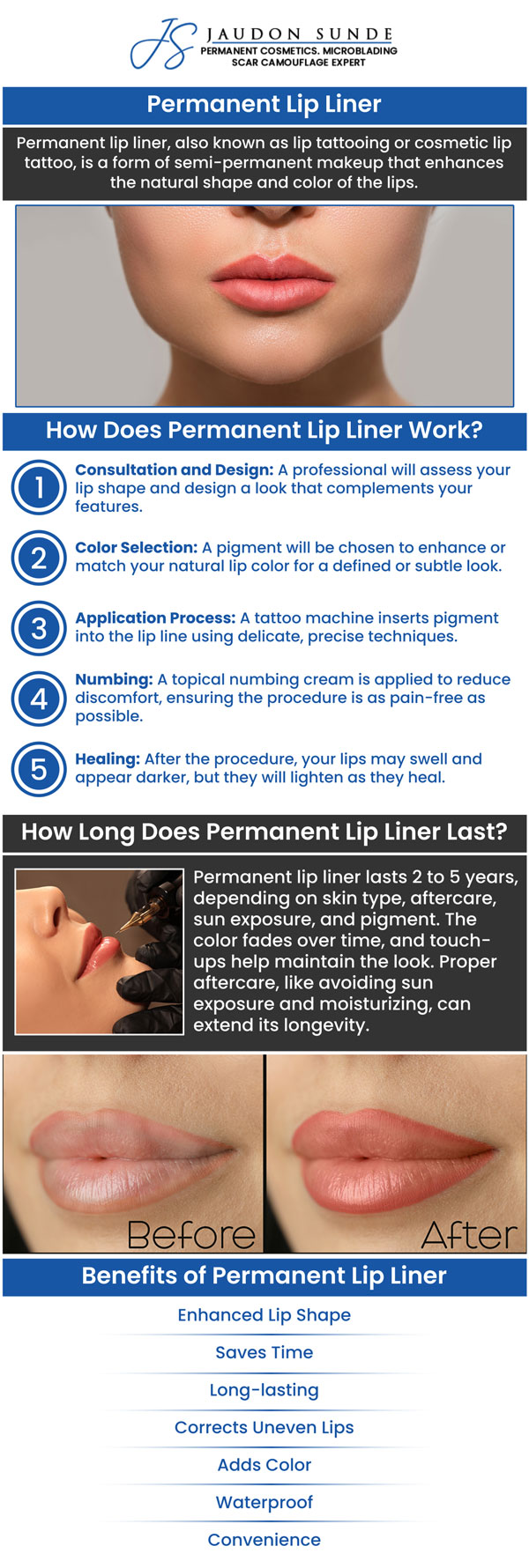
Table of Contents:
Can you have a permanent lip liner?
How much is permanent lip liner?
How long does a tattooed lip liner last?
Is permanent lip makeup worth it?
What to know before getting permanent lip liner
Safety Precautions and Contraindications for Permanent Lip Liner
What precautions help reduce risks during permanent lip liner treatment?
Personalized permanent lip liner with Jaudon Sunde
Does permanent lip liner look natural?
Can permanent lip liner cover dark or uneven lips?
Can you get permanent lip liner if you have cold sores?
Can permanent lip liner be removed?
Medical References:
Yes. Permanent lip liner is a form of cosmetic tattooing in which pigment is placed into the skin along the lip border. It creates a defined outline that does not wash away like regular makeup.
This treatment may be suitable for people who want to:
• Define a naturally faint or uneven lip border.
• Add subtle color around the edges of the lips.
• Create a more balanced-looking lip outline.
• Reduce the need to apply traditional lip liner daily.
• Maintain consistent lip definition throughout the day.
At Jaudon Sunde Permanent Makeup Clinic, permanent blended lip liner is an available service. The color and shape can be discussed before treatment to help establish a look that complements the natural lips. Permanent full lip color is another option for clients interested in adding pigment beyond the lip border.
The cost of permanent lip liner starts at $350, depending on the desired lip shape, color selection, treatment technique, and amount of pigmentation needed. The overall price may also vary based on individual preferences, the level of lip definition desired, and whether additional touch-up appointments are needed to maintain the results.
At Jaudon Sunde Permanent Makeup Clinic, clients can discuss their cosmetic goals, preferred pigment shade, and treatment expectations before proceeding. Jaudon Sunde can provide information about the available permanent lip liner options, current pricing, and any additional fees so clients can understand the expected investment before treatment.
Permanent lip liner can remain visible for several years, although the color and definition may gradually soften. Its longevity varies from person to person.
Several factors can affect how long the pigment remains noticeable:
• Skin characteristics: Individual skin type and healing patterns can influence pigment retention.
• Sun exposure: Ultraviolet exposure may contribute to pigment fading.
• Aftercare: Following recommended healing instructions supports proper recovery.
• Pigment and technique: Color selection and application can influence the final appearance.
• Lifestyle: Individual habits and skin changes may affect how the pigment looks over time.
Touch-ups may be considered when the color becomes lighter or the lip outline loses definition. However, permanent makeup should be considered a long-term cosmetic tattoo rather than a temporary product that will disappear completely.
Permanent lip makeup may be worthwhile for people who prefer a defined lip shape and want to spend less time applying makeup. It offers a lasting alternative to traditional lip liner and can complement an individual’s natural lip color.
Some potential benefits include:
• Consistent definition: The lip border remains pigmented without daily makeup application.
• Personalized color: Pigment selection can take natural lip color and personal preferences into account.
• A balanced appearance: Careful placement can enhance the appearance of the natural lip outline.
• Everyday convenience: It can reduce the need to reapply lip liner throughout the day.
• Complementary treatments: Permanent blended lip liner and permanent full lip color offer different approaches to lip enhancement.
However, permanent lip liner is not right for everyone. It does not physically increase lip volume or replace cosmetic fillers. Pigment may also fade unevenly, change in appearance, or require correction. Since permanent makeup can be difficult to remove completely, clients should carefully consider their preferred color and shape before proceeding.
Permanent lip liner involves placing pigment into the skin, so it is important to understand the procedure’s limitations and potential risks before making a decision.
Potential risks: Cosmetic tattooing can cause infection, allergic reactions, swelling, scarring, or changes in skin texture. Some reactions may appear after the initial healing period. Complete pigment removal is not always possible. The FDA also notes that tattoo inks can become contaminated and that it has not approved tattoo inks for injection into the skin.
Cold sore history: Lip tattooing may trigger a cold sore outbreak in people with a history of oral herpes. Anyone with previous outbreaks should discuss this history with an appropriate healthcare professional before treatment.
Other health considerations: Clients should disclose allergies, medications, skin conditions, a history of keloid scarring, and any active irritation or infection around the lips. Treatment may need to be postponed or reconsidered depending on individual circumstances.
Healing and aftercare: Temporary swelling, tenderness, flaking, and color changes may occur while the lips heal. Follow the technician’s specific aftercare instructions and seek medical attention if redness or pain worsens, pus develops, or fever occurs.
Permanent lip liner is a form of cosmetic tattooing that deposits pigment into the skin around the natural lip border. Although it can enhance lip definition and color, the procedure involves small needle punctures and carries potential risks. Understanding safety precautions and health-related considerations can help clients make informed decisions before treatment.
When should permanent lip liner be postponed or medically reviewed?
Certain conditions may require postponing treatment or obtaining medical guidance before proceeding:
• Active cold sores or herpes outbreaks: Clients with active cold sores, blisters, or early symptoms such as tingling, itching, or burning should postpone treatment until the affected area has completely healed. A history of herpes simplex should also be discussed because lip trauma can trigger an outbreak.
• Active infections or open sores: Bacterial infections, cuts, open wounds, or other infections around the lips should be resolved before cosmetic tattooing.
• Skin inflammation: Active dermatitis, eczema, severe irritation, or unexplained rashes around the lips may interfere with healing and increase the possibility of complications.
• Pigment or product allergies: Individuals with known sensitivities to tattoo pigments, topical anesthetics, or aftercare products should disclose these concerns before treatment.
• Keloid formation or abnormal scarring: People with a history of raised or enlarged scars should discuss their risk before undergoing a procedure involving skin trauma.
• Medical conditions and medications: Conditions or medications that affect immune function, blood clotting, or wound healing may require an individualized medical assessment before treatment.
Taking appropriate safety precautions before and after permanent lip liner can help reduce avoidable complications.
• Confirm that the practitioner follows appropriate hygiene and infection-control practices.
• Ask whether sterile, single-use needles and properly handled pigments are used.
• Discuss pigment ingredients and disclose any previous allergic reactions.
• Provide an accurate medical and medication history during the consultation.
• Follow the recommended aftercare instructions and avoid picking or irritating the treated area while it heals.
• Seek medical attention if redness or pain worsens, swelling increases, pus develops, or fever occurs.
Permanent lip liner is not completely risk-free. Potential complications include infection, allergic reactions, granulomas, scarring, and keloid formation. Some reactions may develop after the initial healing period. Understanding these risks and discussing individual health concerns before treatment are important steps toward making an informed cosmetic decision.
At Jaudon Sunde Permanent Makeup Clinic, a consultation provides an opportunity to discuss treatment expectations, skin concerns, medical history, and precautions before deciding whether permanent lip liner is appropriate.
Jaudon Sunde, C.P.C.T., L.M.T., P.L., has more than 25 years of professional experience in the beauty industry. She is a certified Master Technician through the American Institute of Intradermal Cosmetics and has served in an advisory capacity concerning permanent cosmetics safety practices with the Ohio Department of Health.
Her professional background includes permanent cosmetics, microblading, and scar camouflage. At Jaudon Sunde Permanent Makeup Clinic, clients can also learn about permanent blended lip liner and permanent full lip color, with options based on their individual preferences.
For individuals considering permanent lip liner in Cleveland or Middleburg Heights, OH, a consultation provides an opportunity to discuss color selection, lip shape, expected results, healing, and treatment considerations.
Frequently asked questions
Yes, it can create a natural-looking result when the pigment color and outline complement the person’s natural lips. The final appearance depends on color selection, application, and individual healing.
Pigment may help improve the appearance of an uneven lip border or add color definition. However, results depend on natural lip pigmentation and individual suitability. A consultation is important to discuss realistic expectations.
A history of cold sores does not automatically rule out treatment, but lip tattooing may trigger an outbreak. Discuss your history with a healthcare professional before scheduling the procedure.
Removal can be difficult and may require multiple treatments. Complete removal is not guaranteed, and laser removal can cause scarring or changes in skin pigmentation. Consult a qualified healthcare professional about removal options.
Check Out Our 5 Star Reviews




 Send Text
 How May I Help You?